ABOUT US

Zhenjiang Haobo Intelligent Equipment is a technology innovation enterprise specializing in the design, manufacturing, and sales of solar cell and module packaging automation. The company is fully committed to the development of the photovoltaic industry. Provide production efficiency for photovoltaic enterprises. Continuously providing customers with more efficient and intelligent production equipment and overall solutions. Our business covers silicon production line cutting, cadmium telluride, CIGS, perovskite and BIPV automation, and packaging lines. At the same time, we can provide customers with comprehensive production line equipment, process automation, and factory automation transformation according to their different needs. The company adheres to the concept of "customer satisfaction in design and manufacturing", continuously innovates, scientifically manages, and serves customers with high-quality products and a spirit of continuous improvement. With the aim of long-term cooperation and common development, the company makes contributions to achieving carbon peak and carbon neutrality.

Company Introduction

Corporate Culture

Honor

PRODUCT

  • Automation of velvet
  • Automation of alkali
  • Automation of testin

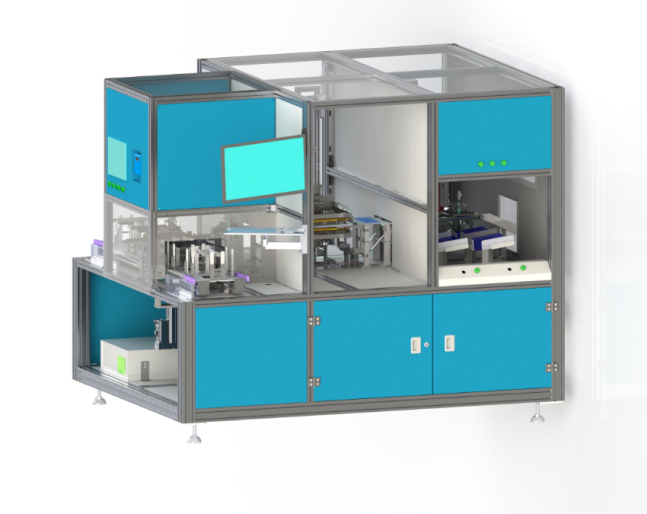
Automation of velvet making process-Slot type velvet feeding machine

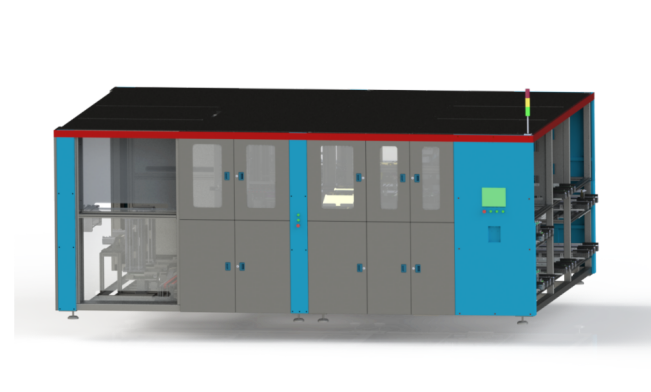
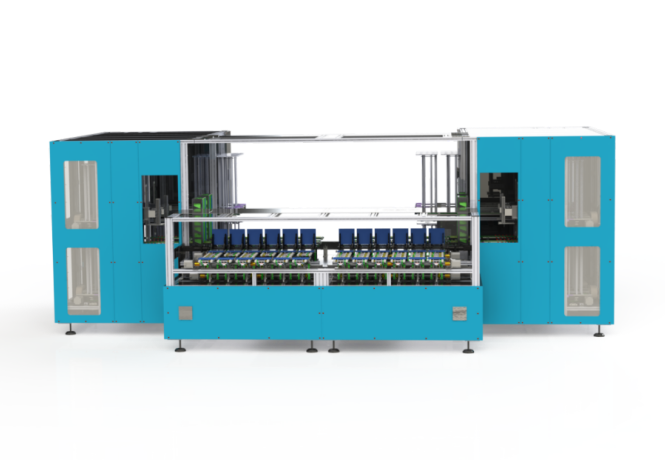
We provide customers with a variety of different types of slot type velvet making machines, which can be used for different manufacturers and models of slot type velvet making equipment. It is divided into online slot type velvet making machines and offline guide machines, as well as different production capacity configurations. In addition, we can choose to equip feeding silicon wafer hidden crack detection, fragment detection, and dual chip detection modules. At the same time, we also provide customized services for customers and tailor slot type velvet feeding machines to meet their different needs.

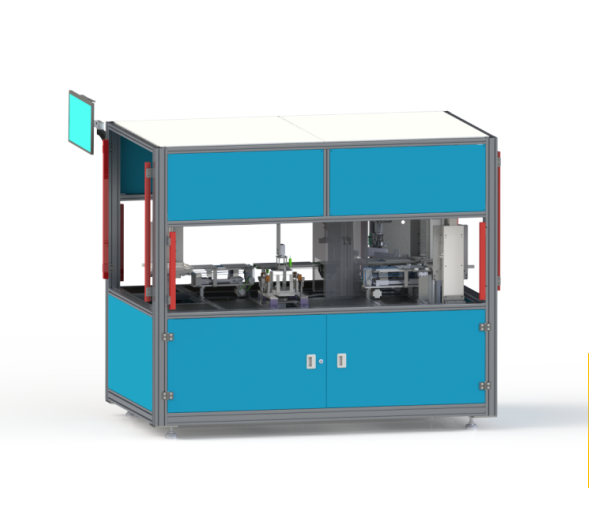
Automation of velvet making process-Slot type velvet cutting machine

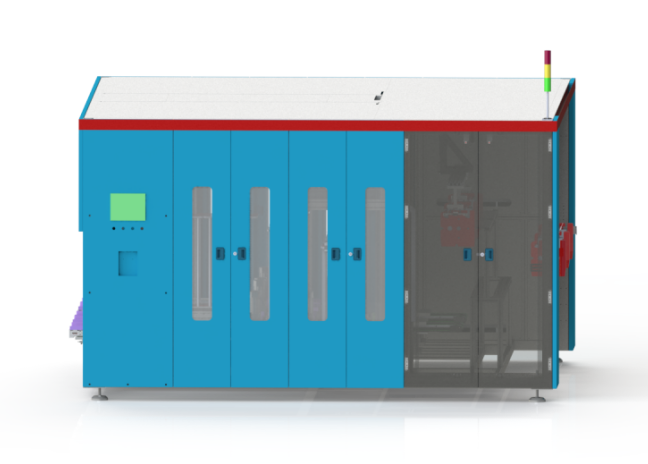
We provide customers with a variety of different types of slot type velvet making machines, which can be used for different manufacturers and models of slot type velvet making equipment. It is divided into online slot type velvet making machines and offline guide machines, as well as different production capacity configurations. In addition, we can choose to equip feeding silicon wafer hidden crack detection, fragment detection, and dual chip detection modules. At the same time, we also provide customized services for customers and tailor slot type velvet feeding machines to meet their different needs.

Our Strengths

Zhenjiang Haobo Intelligent Equipment is a technology innovation enterprise specializing in the design, manufacturing, and sales of solar cell and module packaging automation. The company is fully committed to the development of the photovoltaic industry.

NEWS CENTER

Real time updates on the latest updates from Haobo, keeping abreast of major events.
  • Company News
  • Industry Dynamics

Principles of Photovoltaics

Photovoltaic power generation is a technology that utilizes the photovoltaic effect at semiconductor interfaces to directly convert light energy into electrical energy. The key component of this technology is solar cells. After being connected in series and packaged for protection, solar cells can form large-area solar cell modules, which are combined with power controllers and other components to form photovoltaic power generation devices. The advantage of photovoltaic power generation is that it is less restricted by geographical conditions, as sunlight shines on the earth; Photovoltaic systems also have the advantages of safety and reliability, no noise, low pollution, no need to consume fuel, on-site power generation and supply without the installation of transmission lines, and short construction period.

Photovoltaic power generation is based on the principle of photovoltaic effect, using solar cells to directly convert solar energy into electricity. Whether used independently or connected to the grid for power generation, photovoltaic power generation systems mainly consist of three parts: solar panels (components), controllers, and inverters. They are mainly composed of electronic components and do not involve mechanical components. Therefore, photovoltaic power generation equipment is extremely refined, reliable, stable, with a long lifespan and easy installation and maintenance. In theory, photovoltaic power generation technology can be used in any situation that requires power, from spacecraft to household power sources, from megawatt level power plants to toys, photovoltaic power is everywhere. The component of solar photovoltaic power generation is solar cells, including monocrystalline silicon, polycrystalline silicon, amorphous silicon, and thin-film cells. Single crystal and polycrystalline batteries have the highest usage, while amorphous batteries are used for small systems and auxiliary power supplies for calculators.

The efficiency of domestically produced crystalline silicon batteries is around 10% to 13%, while the efficiency of similar foreign products is about 18% to 23%. A solar panel composed of one or more solar cells is called a photovoltaic module. Photovoltaic power generation products are mainly used in three aspects: first, to provide power for non electric field integration, mainly for the daily life and production of residents in non electric areas, as well as microwave relay power, communication power, etc. In addition, it also includes some mobile power sources and backup power sources; The second is solar powered daily electronic products, such as various solar chargers, solar street lights, and solar lawn lights; The third is grid connected power generation, which has been widely promoted and implemented in developed countries. China's grid connected power generation has not yet started, but some of the electricity used for the 2008 Beijing Olympics was provided by solar and wind power.

04

2024.07

Principles of Photovoltaics

Photovoltaic industry

The photovoltaic industry, abbreviated as PV (photovoltaic). 76% of China's territory has abundant sunlight, and the distribution of solar energy resources is relatively uniform; Compared with hydropower, wind power, nuclear power, etc., solar power generation has no emissions or noise, mature application technology, and is safe and reliable.

In addition to large-scale grid connected power generation and off grid applications, solar energy can also be stored through various methods such as pumping, superconductivity, batteries, hydrogen production, etc. The combination of solar energy and storage can almost meet China's stable energy needs in the future. Solar energy is the cleanest, safest, and reliable energy source in the future. Developed countries are making the development and utilization of solar energy a major part of their long-term plans for the energy revolution. The photovoltaic industry is increasingly becoming another explosive development industry internationally, following the IT and microelectronics industries. The best way to utilize solar energy is through photovoltaic conversion, which utilizes the photovoltaic effect to directly generate electricity by shining sunlight onto silicon materials. The photovoltaic conversion industry chain formed by the application and development of silicon materials is called the "photovoltaic industry", which includes the production of high-purity polycrystalline silicon raw materials, solar cell production, solar cell module production, and the manufacturing of related production equipment. On August 19, 2015, the Ministry of Industry and Information Technology released data showing that China's photovoltaic industry increased by 30% year-on-year in the first half of the year. At the same time, product prices have remained stable with an increase, and business operations have generally improved. The top four domestic polysilicon companies have achieved full production, and the average gross profit margin of the top 10 component companies exceeds 15%. The average net profit margin of the 29 component companies listed in the photovoltaic manufacturing industry standard announcement has increased by 6.5 percentage points year-on-year.

04

2024.07

Photovoltaic industry

Precautions for solar cells

The solar cells adopt a co firing process that only requires one sintering, while forming Ohmic contacts between the upper and lower electrodes. Silicon wafers printed with silver paste, silver aluminum paste, and aluminum paste are dried to completely evaporate the organic solvent. The film layer shrinks into a solid and tightly adheres to the silicon wafer, which can be seen as the metal electrode material layer in contact with the silicon wafer. When the electrode metal material and semiconductor monocrystalline silicon are heated to the eutectic temperature, monocrystalline silicon atoms dissolve into the molten alloy electrode material in a certain proportion. The entire process of monocrystalline silicon atoms dissolving into the electrode metal is quite fast, usually taking only a few seconds. The number of monocrystalline silicon atoms dissolved depends on the alloy temperature and the volume of the electrode material. The higher the sintering alloy temperature, the larger the volume of the electrode metal material, and the more silicon atoms dissolved. This state is called the alloy system of crystalline electrode metal. If the temperature drops at this point, the system begins to cool and form a recrystallization layer. At this time, the silicon atoms that were originally dissolved in the electrode metal material will crystallize again in solid form, which is to grow an epitaxial layer at the interface between the metal and the crystal. If the epitaxial layer contains a sufficient amount of impurities of the same conductivity type as the original crystal material, it obtains the formation of Ohmic contact using the alloy method process; If there is a sufficient amount of impurity components in the crystalline layer that are different in conductivity type from the original crystalline material, it is possible to form P using the alloy process N-junction.

The general mesh belt sintering furnace uses electric heating wire as the heating element, mainly heating the workpiece through heat conduction, and cannot achieve rapid heating. Only radiation or microwaves can quickly heat objects, and radiation heating has the advantages of being economical, safe, reliable, and easy to replace. So solar cell sintering furnaces use infrared quartz tubes as the main heating element. Its design needs to pay attention to the following three issues:

1. The structural form of the heating tube

To achieve temperature spikes in the sintering section, sufficient heating power needs to be arranged within a short furnace space. There are two structures to choose from: shortwave twin tube and shortwave single tube, both of which have a linear power density of 60kW/m2. Although shortwave twin tubes have higher single power (equivalent to two single tubes in parallel), due to their complex manufacturing process, they require higher quality of quartz glass tubes, and the manufacturing cost is about 2.5 times that of a single tube. Therefore, in practical use, single tubes are mostly used.

2. Infrared radiation absorption spectrum

When the infrared radiation energy is absorbed by the workpiece, the unique absorption spectrum of the substance needs to match the emission spectrum in order to absorb the radiation energy with maximum efficiency in the shortest possible time. Therefore, at different stages of sintering, the selected infrared quartz lamps are also different. In the drying stage, it is correct to use a medium wave tube to assist in hot air heating in order to quickly evaporate organic solvents and moisture; In the pre firing stage, it is necessary to ensure sufficient and uniform preheating of the substrate. The medium wave tube has good infrared radiation, balanced absorption and penetration ability, which exactly meets the requirements; In the sintering stage, it is necessary to reach the eutectic temperature of the substrate in a very short time, which can only be achieved by shortwave tubes.

3. Fixation method of heating tube

The peak temperature of the sintering section is around 850 ℃, at which point the surface temperature of the lamp tube will reach 1100 ℃, close to the limit of the use of quartz tubes. A slight overheating that produces pores will immediately burn out the lamp tube. At the lead out position of the lamp tube, due to the sealing of the metal sheet and quartz glass used for welding the wire together, the thermal expansion coefficients of the two are not consistent. If the temperature is too high here, stress cracks will occur, causing the lamp tube to leak air. Therefore, the installation and fixing method of the lamp tube in the furnace is very important. Figure 2 shows a fixing method for infrared lamps in the furnace. This fixing method requires the cold end of the lamp tube to be at least 80mm away from the furnace wall, ensuring that the temperature at the lead out position is not too high; Moreover, the diameter of the installation hole on the furnace wall is 2-3mm larger than that of the lamp tube, and the lamp tube is suspended and clamped in the furnace through fixing fixtures on both sides.

04

2024.07

Precautions for solar cells